
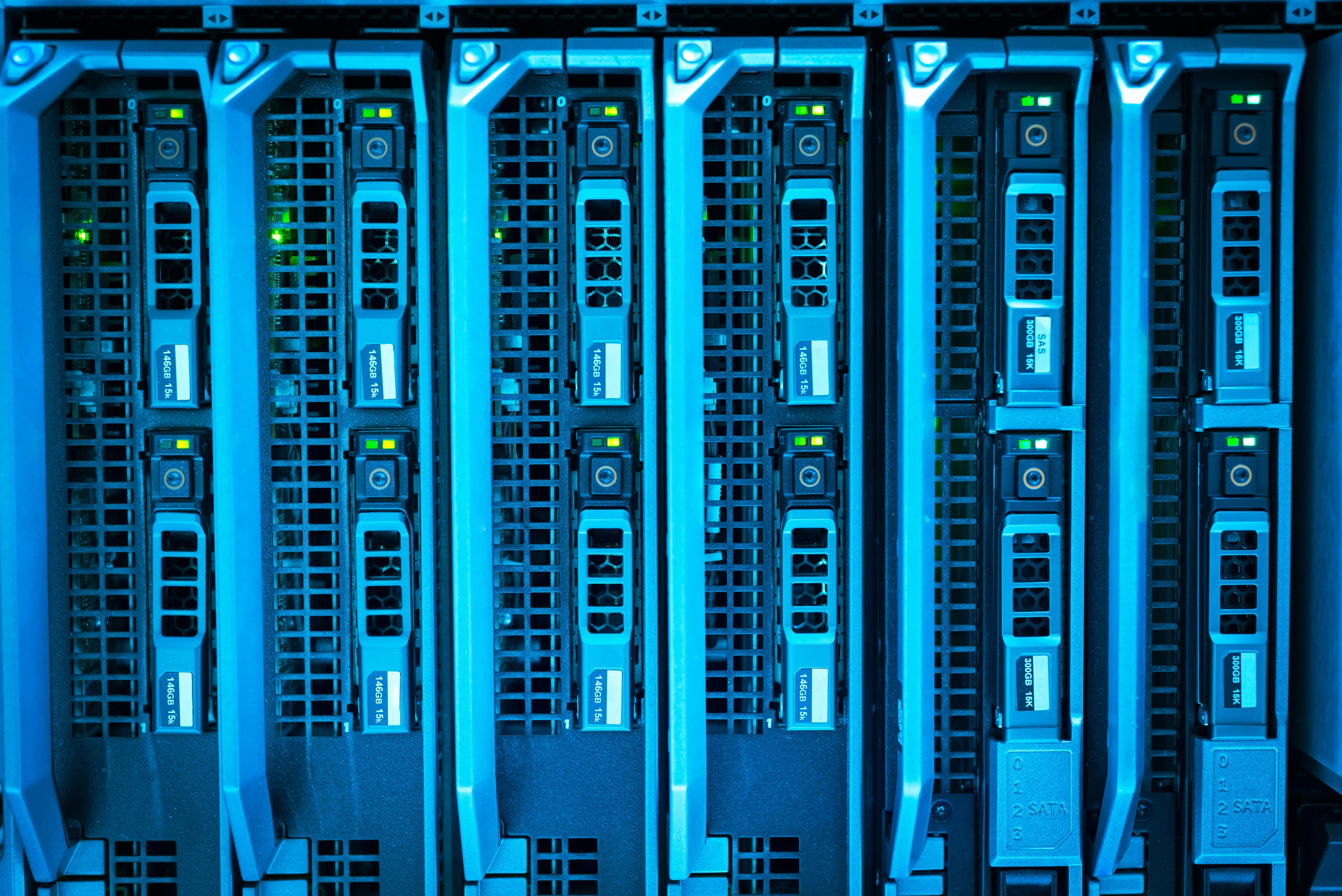
Server disposal means retiring servers securely at end of life — destroying the data, recovering the resale value, and responsibly recycling the rest. It sounds simple, and it is, as long as you treat the two halves of a server differently: the drives are a data-breach risk to be destroyed and certified, and the hardware is an asset to be recovered. Get those backwards — scrap the asset, or lose track of a drive — and you’ve either wasted money or created a liability.
The two halves of a server
A retired server is two things at once:
- Data-bearing storage (the drives) — a risk. Until the data is destroyed and certified, the server is a breach waiting to happen.
- The chassis and components (CPU, memory, GPUs, NICs, PSUs) — value. Current-generation compute, GPUs, and memory have real secondary-market worth.
Good server disposal handles both: destroy the data with proof, recover the value with transparency.
The secure server-disposal process
- Inventory by serial. Every server is logged by serial number — the chain-of-custody baseline. (See chain of custody in ITAD.)
- Sanitize or destroy the drives. Each drive is verify-wiped to NIST 800-88 or physically shredded, with a certificate of destruction per serial. Healthy drives that can be safely wiped may be resold; failed or sensitive ones are destroyed.
- Test and grade the hardware. Working servers are tested and condition-graded for resale.
- Recover value. Resellable servers and components are remarketed, with a share of the proceeds returned to you.
- Recycle the rest. What can’t be reused goes to R2v3-certified recycling with downstream tracking — nothing landfilled.
Server decommissioning vs. data center decommissioning
These overlap but aren’t the same:
- Server disposal / decommissioning retires individual servers — wipe or destroy the data, then resell or recycle.
- Data center decommissioning is the whole facility — inventory, deinstall, transport, sanitize, and recover value across every rack.
If you’re clearing a handful of servers, it’s server disposal. If you’re emptying a cage or a room, it’s a decommission. CTS does both under one chain of custody.
Don’t scrap what you can sell
The most common server-disposal mistake is treating every retired server as e-waste. A scrapper pays you pennies for the metal; an asset-recovery provider tests, grades, and resells the working hardware and returns a share of the real value. On current-generation gear, that difference is substantial. (Estimate your buyback value.)
CTS retires servers as an R2v3-certified operator: drives destroyed and certified per serial, hardware tested and remarketed, residual value returned, the rest recycled responsibly. See data center decommissioning and IT asset recovery, or talk to the team about a batch of servers to retire.