
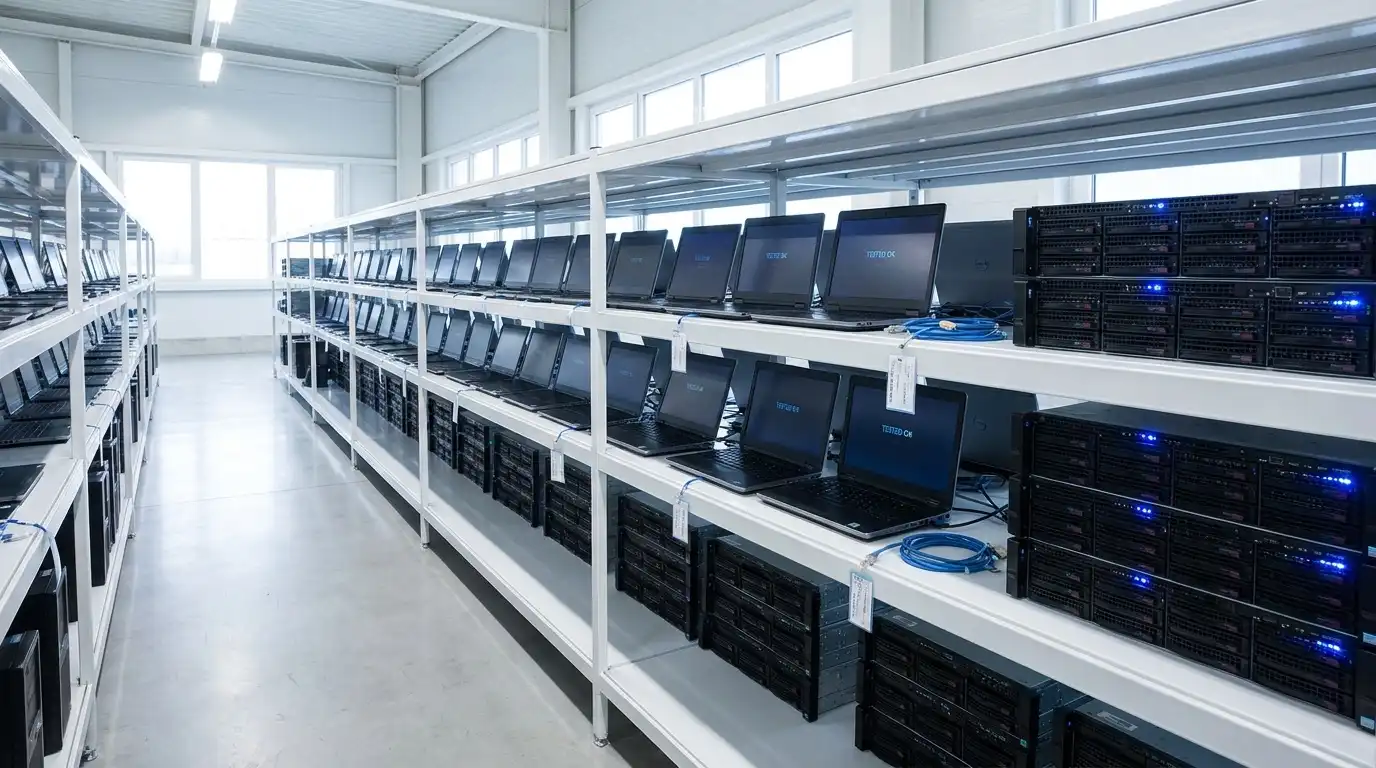
Your retired hardware has value. We recover it.
We resell retired enterprise IT equipment through certified global channels and share the proceeds back to you — after all data is sanitized and certified per serial number. Disposition as a capital return, not a cost.
What is IT asset recovery?
UPDATED SEPTEMBER 2026
IT asset recovery is the disciplined practice of reclaiming financial value from decommissioned IT hardware: refurbishing, remarketing, and reselling equipment that holds secondary market value, and responsibly recycling what does not. CTS sanitizes all data to NIST 800-88 first, resells through certified enterprise channels, and shares recovered proceeds back to your organization. On current-generation server and endpoint fleets, buyback returns routinely offset the entire cost of de-racking, logistics, and certified data destruction.
The secondary market is strong right now.
AI & accelerated GPU server resale value vs. seven-year historical baseline.
DDR4 registered server memory resale value, year over year.
Source: Sims Lifecycle Services H1 FY2026, via competitive intel report. Secondary pricing reflects active secondary market demand indices.
Secondary market hardware value profiles.
Hardware depreciation varies dramatically by platform tier. Below is an overview of representative secondary market liquidity, value retention profiles, and certified sanitization pathways across primary enterprise hardware classes:
| HARDWARE CATEGORY | TARGET SPECIFICATIONS | MARKET DEMAND | TYPICAL RETENTION | SANITIZATION PATH |
|---|---|---|---|---|
| Enterprise 2U Compute Nodes | Dell PowerEdge R750/R760, HPE ProLiant DL380 Gen10+/Gen11 (Dual Xeon Gold/Platinum, 256GB–512GB RAM) | High (Immediate liquidity for cloud tier-2 hosting & enterprise private clouds) | 35% – 50% of secondary market value | NIST 800-88 Purge (Cryptographic erase + RAID verify) |
| AI & GPU Accelerated Servers | NVIDIA HGX/DGX A100 (80GB) & H100 SXM5, Supermicro 4U GPU rigs, 8× L40S inferencing nodes | Peak / Urgent (Global scarcity; trades at premium historical multiples) | 65% – 85% of baseline value | Firmware reset + cryptographically verified NVRAM sanitization |
| Enterprise Memory Lots | DDR4 3200MHz Registered ECC (32GB/64GB sticks), DDR5 4800/5600MHz RDIMMs (64GB/96GB lots) | Very High (+450% YoY secondary price appreciation due to supply shortages) | 60% – 75% residual value | Volatile RAM automatically cleared upon power-off; physical pin diagnostics |
| All-Flash NVMe Storage Arrays | Pure Storage FlashArray //X & //C, NetApp AFF A-Series, Dell PowerStore, enterprise U.2/U.3 NVMe drives | High (Solid enterprise SAN expansion demand) | 40% – 55% of baseline value | NIST 800-88 Block Erase or cryptographic erase per NVMe namespace |
| Core Enterprise Networking | Arista 7050X3 / 7280R3 100G/400G switches, Cisco Catalyst 9300/9500, Nexus 9300 spine-leaf | Moderate to High (Colocation facilities, campus backbones, and labs) | 30% – 45% residual value | Configuration NVRAM purge + ASIC factory zeroization |
| Tier-1 Corporate Endpoints | Lenovo ThinkPad T14/X1 Carbon Gen 10+, Dell Latitude 5430/7430, Apple Silicon M2/M3 MacBook Pro/Air | High (Bulk enterprise remote-work deployments) | 25% – 40% (depending on cosmetic grading A/B) | NIST 800-88 Clear/Purge with certified OS reactivation |
How buyback offsets ITAD logistics & destruction costs.
Net Operational Expense
- De-racking & pack-and-ship freight: Client Cost
- Serialized on-dock hard drive shredding: Client Cost
- Scrap e-waste handling fees: Client Cost
- Hardware value forfeited or retained by vendor: Zero Return
Net-Zero or Cash-Positive ITAD
- Secondary market valuation performed prior to pickup
- Certified NIST 800-88 Purge allows hardware reuse & resale
- De-racking, logistics & certification credited against proceeds
- Surplus proceeds disbursed to client via direct ACH wire
The Decommissioning Recovery Formula
Gross Hardware Resale Proceeds minus (Logistics + De-racking + Serialized NIST 800-88 Sanitization) = Net Cash Returned to Client. On standard 3- to 4-year data center server refreshes, enterprise compute and memory lots routinely generate 150% to 400% of project service costs, turning scheduled fleet refreshes into self-funding capital recovery events.
From retired to returned, in five steps.
- 01 · COLLECT & INVENTORY
Assets are collected, serialized, and logged into your client portal — establishing an unbroken chain of custody.
- 02 · DESTROY THE DATA
Every drive is sanitized to NIST SP 800-88 Rev. 1 or physically shredded, with an audit-ready certificate of destruction issued per serial.
- 03 · DIAGNOSTIC TEST & GRADE
Hardware undergo automated component diagnostics, stress-testing, and standardized cosmetic grading (A/B/C).
- 04 · REMARKET & RESELL
Hardware is remarketed across established global wholesale and end-user channels; subcomponents are harvested from non-working units.
- 05 · TRANSPARENT FINANCIAL SETTLEMENT
Detailed line-item recovery proceeds are returned to you via wire or check, offset directly against project logistics costs.
Every asset takes the path that recovers the most.
| PATH | WHEN | RESULT |
|---|---|---|
| Resell / remarket | Healthy, in-demand hardware that can be verify-wiped to NIST 800-88 | Highest value recovered; a significant share of the resale returned to your IT budget. |
| Harvest components | Partial-value units with highly valuable subcomponents (Xeon/EPYC CPUs, GPUs, DDR4/DDR5 RAM, power supplies) | Subcomponents recovered into OEM / secondary spare supply chains; remainder recycled to R2v3. |
| Recycle (R2v3) | Failed, obsolete, non-functional, or zero-resale-value electronic equipment | Responsibly recycled with serialized downstream mass balance; zero landfill diversion. |
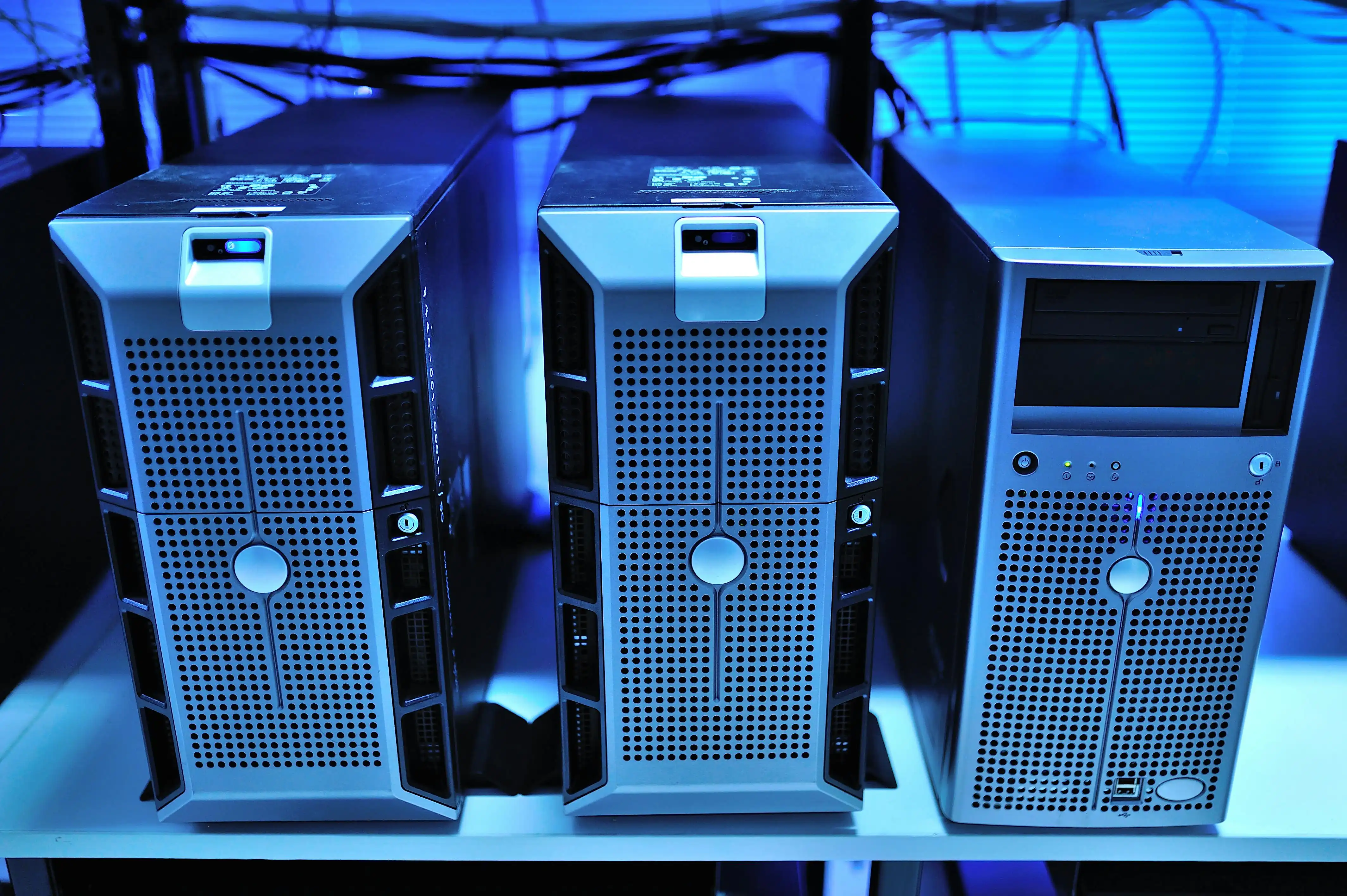
Four things decide what your fleet is worth.
- Make & model generation
Current-generation and immediate prior-generation architectures (AI/GPU compute, scalable server families) command the highest secondary bids.
- Condition & completeness
Complete units with dual redundant power supplies, drive caddies, bezel, and mounting rails grade higher than bare chassis.
- Lot volume & consolidation
Consolidated pallet lots of uniform configurations yield superior remarketing pricing compared to fragmented, mixed-model batches.
- Market timing & lifecycle speed
Secondary values depreciate rapidly once next-generation enterprise hardware ships. Decommissioning within 3 to 4 years yields peak return.
From enterprise servers to endpoints.
- ▲Laptops & notebooks (Lenovo, Dell, Apple Silicon)
- ▲Desktops & high-end engineering workstations
- ▲Rack & blade servers (Dell PowerEdge, HPE ProLiant, Cisco UCS)
- ▲AI & GPU servers (NVIDIA HGX/DGX, H100, A100, L40S)
- ▲SAN/NAS storage arrays & NVMe SSD lots
- ▲Enterprise memory lots (DDR4 / DDR5 ECC Registered RDIMMs)
- ▲Core enterprise switches, routers & optics (Arista, Cisco, Juniper)
Recovery is one stage of full IT asset disposition; data is destroyed first. For enterprise hardware, learn how to sell used servers and review our guide to server disposal. For data-center facilities, see data center decommissioning. Curious how pricing nets out? See ITAD cost & pricing.