
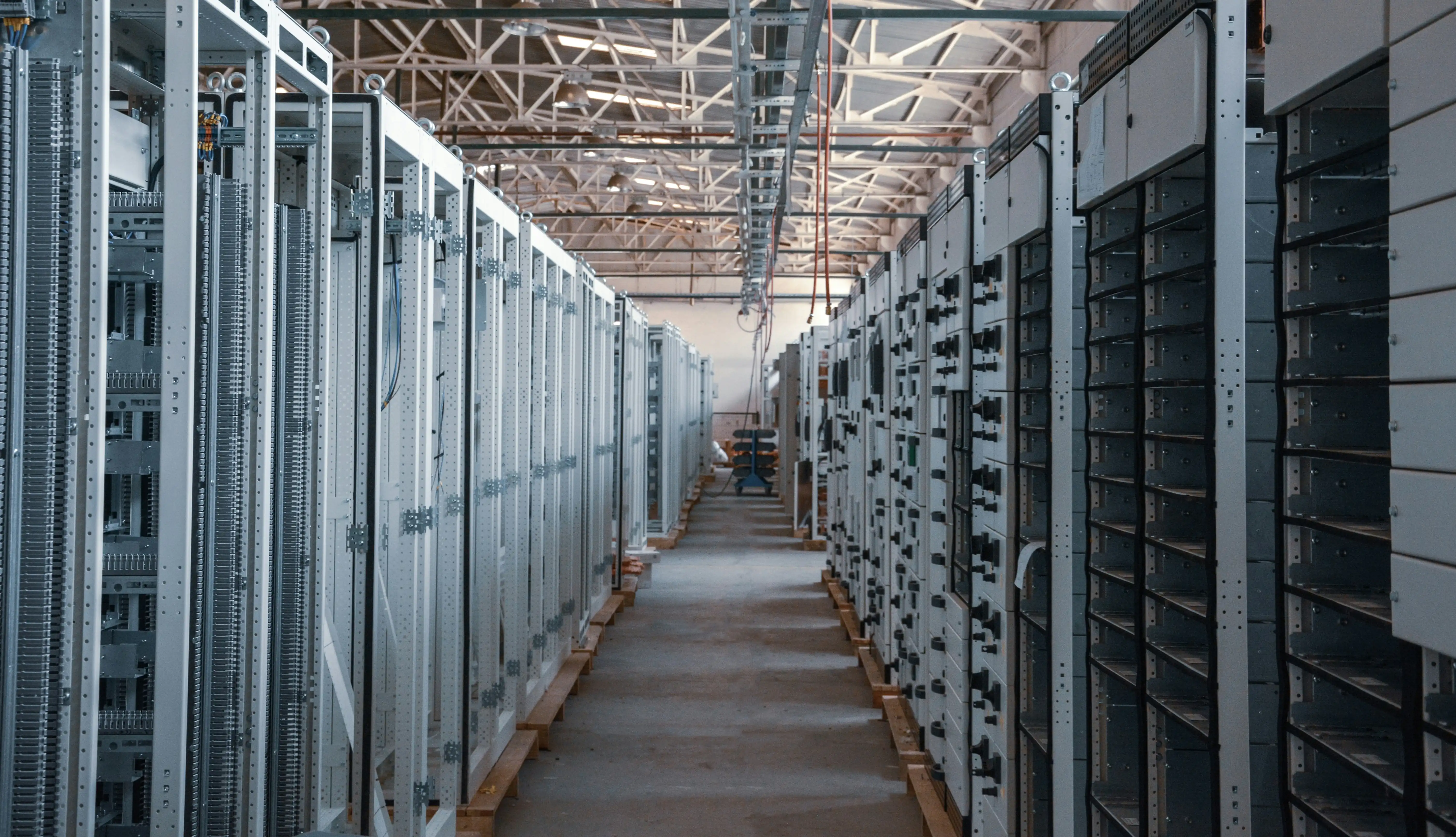
Data center decommissioning is priced as a net — the cost of the service minus the resale value of your hardware — not a flat fee. That’s the single most important thing to understand before you budget for one, because the same project can be a five-figure cost or a net payment to you depending on what’s in the racks. Here’s what drives each side of the equation.
The two sides: cost and value
Every decommission has a cost (the work) and a value (your hardware’s resale worth). The number that matters is the net of the two. A provider who only quotes the cost — and quietly scraps the resellable gear — is leaving your money on the table.
What drives the cost
- Rack and device count. The biggest single driver. More racks and devices mean more deinstall labor, packing, and logistics.
- Site count and access. Multiple sites on different schedules multiply coordination. Restricted access — after-hours windows, escorted work, loading-dock limits — adds labor.
- Data-destruction method. Verify-wiping drives for resale is the most economical path. Onsite shredding (a shred truck to your site) and armed transport add cost for the security they buy. Match the method to the data sensitivity, not to a blanket “shred everything” policy. (See data sanitization vs destruction.)
- Logistics and weight. Data-center hardware is heavy; freight, distance, and special handling factor in.
- Documentation depth. Per-serial certificates and full chain-of-custody reporting are standard at a serious provider; heavy custom reporting can add cost.
What drives the value (the offset)
This is where decommissioning stops being pure cost. These categories hold real secondary-market value right now:
- Current-generation servers — especially AI-capable and recent-gen compute.
- Enterprise storage — arrays, NVMe, SSDs.
- GPUs — among the strongest secondary-market categories.
- Memory — DDR4/DDR5 has run well above historical averages.
- Networking — switches, firewalls, optics.
Healthy gear in these categories is verify-wiped and resold, with a share of the residual returned to you. The newer and more in-demand the fleet, the more the value offsets — or beats — the cost.
When it pays for itself
A decommission is most likely to be net-positive when:
- The hardware is current-generation and in demand.
- The data can be safely verify-wiped (so drives are resold, not shredded).
- The volume is consolidated enough to be efficient to process.
It’s most likely to carry a net cost when:
- The equipment is old, end-of-life, or damaged with little resale value.
- Policy or sensitivity requires physical destruction of otherwise-resellable drives.
- The work is spread thin across many small, hard-to-access sites.
How to budget for one
Don’t ask “what does it cost?” Ask for a net quote: the service cost, the estimated buyback, and the resulting net — with per-asset pricing transparency. That’s the only number that reflects reality. A transparent provider quotes both sides and shows you the net.
CTS prices decommissions exactly this way. See data center decommissioning services, estimate your buyback value, or talk to the team for a net quote on your facility.