
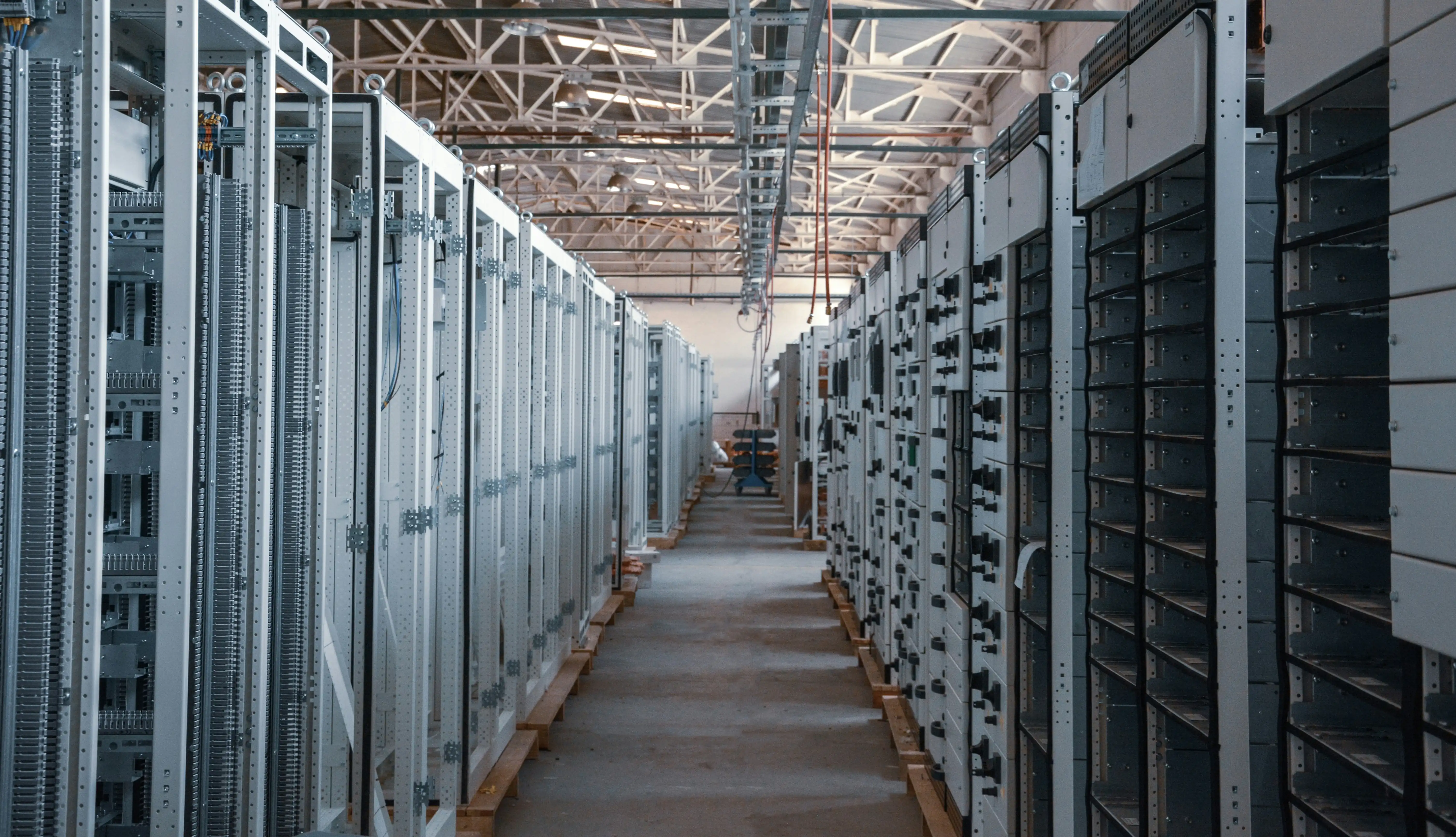
Data center decommissioning is a high-stakes, multi-disciplinary operational event. Whether driven by a cloud cutover, colocation lease expiration, multi-facility consolidation, or high-density AI infrastructure refresh, shutting down an enterprise data center is not a simple demolition exercise.
When performed incorrectly, decommissioning causes catastrophic operational blind spots: accidental unplugging of adjacent production hosts, cluster panics caused by severed SAN connections, multimillion-dollar regulatory fines from unaccounted hard drives, and punitive lease holdover penalties of $10,000 to $30,000 per month from colocation landlords.
When executed properly under a rigorous Standard Operating Procedure (SOP), decommissioning eliminates compliance liability, returns white-space real estate on schedule, and recovers hundreds of thousands of dollars in secondary market hardware value to offset project costs.
This enterprise SOP provides the definitive, four-phase checklist used by Critical Technology Services to execute zero-downtime, fully audited data center decommissions nationwide.
The 4-Phase Operational Decommissioning Matrix
Every successful project follows a structured progression from discovery to final financial settlement. Use this operational matrix as your master project framework:
| Phase | Core Objective | Key Operational Tasks | Critical Milestone Deliverable |
|---|---|---|---|
| Phase 1: Discovery & Scoping | Establish baseline inventory & facility logistics | CMDB reconciliation, physical rack audit, landlord MOP submission, COI delivery, cable tracing | Signed Master Manifest & Approved Facility MOP |
| Phase 2: Logical Migration & Power Down | Isolate hardware without impacting production | Workload drain, hypervisor maintenance mode, SAN LUN unmounting, ToR switch traffic check, PDU branch power sequencing | 0 Gbps Verification & Certified Power-Down Sign-off |
| Phase 3: Sanitization & Precision De-Rack | Neutralize data risk & extract physical assets | NIST 800-88 Purge/Clear, onsite SSD/HDD shredding, high-value component harvesting, server lift de-racking, ESD packing | Serialized Certificates of Destruction (CoD) |
| Phase 4: Abatement, Handover & Settlement | White-space cage return & financial closeout | Overhead/subfloor cable pulling, PDU/rack removal, slab sweep, landlord punch-list inspection, R2v3 recycling, buyback payout | Landlord White-Space Acceptance & Buyback Wire Settlement |
Phase 1: Pre-Decommission Discovery & Scope Baseline
The planning phase determines whether your project finishes ahead of schedule or grinds to an expensive halt. Automated CMDB discovery tools consistently miss 15% to 20% of physical assets—including standalone appliances, out-of-band management switches, legacy storage shelves, and unmonitored spare drives.
1.1 Physical Site & Hardware Inventory Audit
- Conduct 100% Wall-to-Wall Physical Audit: Do not rely exclusively on ServiceNow or Device42 scans. Dispatch technicians to log every rack unit (U-space), recording make, model, chassis serial number, asset tag, and MAC addresses.
- Identify Multi-Tenant and Shared Racks: Flag any racks containing equipment owned by other internal divisions, third-party colocation cross-connects, or active carrier demarcation (demarc) circuits.
- Document Drive Population & Storage Architecture: Catalog every internal drive bay, hot-swap backplane, NVMe blade, and SAS expander to prevent untracked storage media from leaving the cage.
- Audit Auxiliary Hardware: Catalog unmanaged network patch panels, fiber distribution hubs (FDP), PDUs (switched vs. metered), automatic transfer switches (ATS), and server rail kits.
1.2 Facility & Landlord Logistics Alignment
- Colocation Method of Procedure (MOP): Submit a detailed MOP to landlord engineering (e.g., Equinix, Digital Realty, CyrusOne, QTS) detailing working hours, tool usage, power-down steps, and security clearances.
- Certificate of Insurance (COI): Issue a COI naming the colocation owner and building management as additional insured, meeting the $5M–$10M commercial general and umbrella liability thresholds.
- Loading Dock & Freight Elevator Booking: Reserve dedicated loading dock bays, freight elevators, and staging areas. Verify dock height, ramp pitch, and roll-up door clearances for air-ride 53-foot logistics trailers.
- Union Labor & Local Facility Rules: Verify whether the facility requires union trades (e.g., IBEW electricians for high-voltage whip disconnects or Teamsters for dock operations).
1.3 Stakeholder Alignment & RACI Sign-Off
- Designate Project Lead & Incident Commander: Appoint an accountable single point of contact (SPOC) authorized to halt operations immediately if anomalous network alerts trigger.
- Define Cross-Functional Escalation Paths: Establish live escalation channels connecting Infrastructure Operations, SecOps, Storage Engineering, and the Certified Data Center Services Partner.
Phase 2: Logical Migration Verification & Power Sequencing
The most catastrophic error in data center decommissioning is pulling power from a server that is still serving active traffic. Phase 2 enforces absolute software and storage isolation before physical hand tools touch hardware.
+-----------------------------------------------------------------------------------+
|                           PHASE 2 ISOLATION GATEWAY                               |
|                                                                                   |
|  [ Workload Migration ] -> [ SAN/NAS LUN Detach ] -> [ ToR Port Verification ]    |
|            |                          |                          |                |
|            v                          v                          v                |
|  All VMs / Containers       Flush Storage Caches &      Confirm 0.00 Mbps on     |
|   Evacuated to Cloud/DR      Unmount Fiber Channels       Active Switch Trunk     |
|                                                                                   |
|  [ Branch Breakers ]   <-   [ Out-of-Band Logs ]   <-   [ OS Graceful Shutdown ]  |
|            |                          |                          |                |
|            v                          v                          v                |
|  Lockout/Tagout (LOTO)       Export Final Hardware       Execute ACPI Shutdown    |
|   A/B Rack PDU Feeds          Health & Asset Telemetry    via Orchestration CLI   |
+-----------------------------------------------------------------------------------+
2.1 Workload Evacuation & Service Cutover
- Cluster Draining & Evacuation: Put hypervisors (VMware ESXi, Proxmox, Nutanix, KVM) into maintenance mode and drain all virtual machines and Kubernetes nodes to alternate availability zones or secondary data centers.
- Traffic Shedding Verification: Monitor network telemetry on Top-of-Rack (ToR) and core distribution switches. Confirm throughput on all access interfaces drops to 0.00 Mbps.
- De-register DNS & Load Balancers: Remove target host VIPs and node pools from internal and external load balancers (F5, NetScaler, AWS Route 53, Cloudflare).
- Active Directory & Identity Revocation: Revoke machine accounts, TLS certificates, and static IP reservations tied to decommissioning hardware.
2.2 Storage Array & Volume Detachment
- Flush Write Caches & Dismount File Systems: Gracefully unmount all NFS, SMB, and iSCSI targets from operating systems before triggering chassis shutdown.
- Detach Fibre Channel & NVMe-oF LUNs: In SAN fabrics (Brocade, Cisco MDS), formally unzone and mask decommissioned World Wide Names (WWNs) to prevent SAN fabric errors or storage controller kernel panics.
- Confirm Replication Integrity: Verify that remote disaster recovery snapshots, asynchronous database replicas, and tape archive synchronizations have reached consistent recovery point objectives (RPO).
2.3 Safe Shutdown & Power Sequencing
- Execute Graceful OS Power Down: Initiate orderly software shutdowns across all compute and storage nodes via automated orchestration scripts or out-of-band management (iDRAC, iLO, IPMI).
- Sequence Chassis Shutdown: Power down compute nodes first, followed by storage expansion shelves, SAN controllers, management switches, and finally spine switches.
- PDU Branch Circuit Load Shedding: Trip and lock out branch circuit breakers on rack PDUs sequentially. Verify absence of voltage with a calibrated digital multimeter before disconnecting input whips to eliminate arc flash risks.
Phase 3: Serialized Data Sanitization & Precision De-Racking
Once power is safely isolated, Phase 3 addresses data security and physical hardware extraction. Sanitization must be completed to recognized compliance frameworks before assets leave your security perimeter.
3.1 Data Sanitization & Destruction Execution
- Categorize Media by Policy: Classify storage media into:
- Healthy Drives for Resale/Reuse: Sanitize via NIST SP 800-88 Rev. 1 Clear or Purge (cryptographic erase / block wipe) with 100% sector verification. Learn more in our NIST 800-88 Data Destruction Guide.
- Failed, Legacy, or Highly Classified Media: Execute onsite physical shredding using mobile shred vehicles with high-torque industrial shredders.
- Solid-State Drive (SSD/NVMe) Shredding Standard: Verify that solid-state media shredded on-site is processed through a dedicated micro-cutter down to a 2mm particle size to ensure flash memory dies are completely pulverized.
- Dual-Custody Serial Verification: Scan the serial number of every individual drive into the master audit manifest prior to wiping or shredding. Two authorized witnesses must countersign every batch log.
- Issue Serialized Certificates of Destruction: Generate an immutable Certificate of Destruction (CoD) documenting drive serial numbers, drive models, wiping tools, timestamp, and operator credentials.
3.2 High-Value Component Harvesting (Asset Recovery Optimization)
Enterprise compute components often retain substantial secondary market demand even when whole systems are replaced. Harvesting valuable sub-components directly on the data center floor preserves maximum resale value:
| Hardware Category | High-Value Target Sub-Components | Handling & Preservation Protocol |
|---|---|---|
| Compute Nodes | Intel Xeon 3rd/4th/5th Gen, AMD EPYC 7002/7003/9004 CPUs | Antistatic clamshell packaging; inspect for bent LGA pins |
| Server Memory | 32GB, 64GB, 128GB, 256GB DDR4 & DDR5 ECC Registered DIMMs | Antistatic conductive foam trays; dry storage |
| AI / GPU Clusters | NVIDIA H100, A100, L40S, RTX 6000 Ada (SXM5 & PCIe) | Specialized ESD-shielded shock-mounted custom flight cases |
| High-Speed Storage | Enterprise U.2, U.3, E1.S NVMe SSDs (3.84TB, 7.68TB, 15.36TB) | NIST 800-88 Purge wipe, serialized static bags |
| Enterprise Optics | 100G QSFP28, 400G QSFP-DD, 800G OSFP Optical Transceivers | Clean dust caps installed immediately; protective compartmentalized boxes |
Want to know what your hardware is worth before de-racking? Run your inventory through the CTS Buyback Value Estimator.
3.3 Precision Physical De-Racking & Packaging
- Bottom-to-Top De-Racking Order: Always unrack chassis from the bottom of the cabinet upward. De-racking heavy 4U storage arrays or 8U GPU servers from the top first compromises the cabinet’s center of gravity and creates severe tipping hazards.
- Mechanical Server Lifts: Mandate motorized or hydraulic server lifts for any chassis exceeding 50 lbs (23 kg) to prevent personnel injury and equipment drop damage.
- ESD Protective Packaging: Wrap all systems destined for remarketing in multi-layer anti-static bubble wrap and band them securely to heat-treated wooden pallets (ISPM-15 compliant) with heavy-duty corner boards and stretch film.
- Dedicated, Monitored Freight: Transport palletized hardware in dedicated, air-ride, GPS-tracked logistics vehicles secured with numbered, tamper-evident bolt seals.
Phase 4: Facility Abatement, White-Space Cage Surrender & Financial Closeout
Decommissioning is not complete when the servers are wheeled onto the truck. To avoid ongoing colocation lease liabilities, the facility white-space must be fully abated and formally accepted by the landlord.
+-----------------------------------------------------------------------------------+
|                        PHASE 4 WHITE-SPACE RESTORATION                            |
|                                                                                   |
|  [ Structured Cable Pull ]  ->  [ Infrastructure Abatement ] -> [ Environmental ]|
|            |                                |                          |          |
|            v                                v                          v          |
|  Overhead Basket Trays &          Remove Cabinets, PDUs,        HEPA Industrial   |
|   Underfloor Copper/Fiber          Busway Whips & Ground Straps  Slab Vacuuming   |
|                                                                                   |
|  [ Financial Settlement ]   <-  [ Final Compliance Packet ]  <- [ Landlord Sign ] |
|            |                                |                          |          |
|            v                                v                          v          |
|  Wire Resale Residual Payout      Reconcile 100% of Serials      Formal Punch-List|
|   to Enterprise Client             with CoD & CoR Audit Pack     Surrender Signoff|
+-----------------------------------------------------------------------------------+
4.1 Structured Cabling & Cable Abatement
- Overhead Basket Tray Cable Extraction: Pull all redundant twisted-pair (Cat5e, Cat6, Cat6A) and fiber jumpers (OM3, OM4, OS2) back to the patch panels or ladder racks. Cut and neatly coil dead runs according to local fire code and National Electrical Code (NEC) Article 800.
- Underfloor Plenum Cable Abatement: Lift raised floor tiles and remove all abandoned low-voltage cabling running beneath the white-space floor to restore proper plenum airflow.
- Demarcation Cross-Connect Removal: Trace and safely terminate cross-connect cables running to telco meet-me rooms (MMR), ensuring no active adjacent tenant circuits are disturbed.
4.2 Mechanical & Electrical Infrastructure Removal
- Disconnect Busway Tap Boxes & Power Whips: Qualified electricians disconnect overhead busway plug-in units (Starline, Schneider) and roll up underfloor flexible conduit whips back to panelboards.
- Unbolt Server Cabinets: Unbolt 42U/48U racks from floor seismic anchors. Remove seismic brackets, blanking panels, horizontal cable organizers, and rack-mount PDU strips.
- Remove Grounding Braid & Bonding Straps: Disconnect and remove all telecommunications main ground busbar (TMGB) copper bonding straps.
4.3 Landlord White-Space Cage Surrender
- Tile Restoration: Replace any warped, drilled, or broken raised floor access tiles with matching heavy-load specification tiles.
- Industrial HEPA Vacuuming: Perform complete industrial HEPA-filter vacuuming of subfloor plenum areas and surface floor tiles to achieve landlord “broom-clean” condition.
- Joint Facility Punch-List Walkthrough: Walk the vacated footprint with the colocation facility operations manager. Review the site against the initial move-in condition report and secure a written sign-off confirming full release of lease obligations.
4.4 Final Audit Package & Financial Settlement
- 100% Serialized Reconciliation: Match every item in the original Phase 1 inventory against the final disposition status (Remarketed, Harvested, Shredded, or Recycled).
- Certificates of Recycling (CoR): Provide certified mass balance reporting for all scrap chassis, sheet metal, and cabling processed through R2v3-certified downstream recyclers.
- Issue Asset Recovery Settlement: When remarketable hardware value exceeds the labor, logistics, and data destruction costs, issue the client a clear settlement report and wire the net credit balance directly. For older fleets, review our Data Center Decommissioning Cost Breakdown to understand standard pricing variables.
The Economics of Data Center Decommissioning: Cost vs. Return
Data center decommissioning is too often treated as a pure expense. In reality, modern enterprise infrastructure carries immense residual market demand.
Net Project Budget = (De-rack Labor + Logistics + Data Destruction + Abatement) - Secondary Market Resale ValueWhen enterprise servers containing 3rd Gen Intel Xeon or AMD EPYC processors, enterprise NVMe storage, and high-capacity DDR4/DDR5 ECC memory are properly sanitized rather than scrapped, hardware buyback values consistently flip project economics into net-positive returns.
- Typical Decommissioning Cost Range: $350 to $900 per rack (covers on-site technicians, certified data sanitization, cable pull abatement, and insured logistics).
- Typical Hardware Recovery Range: $1,500 to $12,000+ per rack (driven by compute density, enterprise GPUs, and un-shredded sanitized flash storage).
Critical Mistakes That Derail Decommissioning Projects
Avoid these common enterprise operational failures:
- Relying Exclusively on Virtual CMDB Discovery: Virtual discovery tools cannot detect powered-off hardware, rogue test servers, or physical cables routed between adjacent cages. Physical audits are non-negotiable.
- Shredding High-Value Storage Drives Indiscriminately: Shredding perfectly healthy enterprise NVMe and SAS SSDs turns $150–$600 storage assets into $0.40 worth of shredded e-scrap. Always sanitize via NIST 800-88 Purge whenever security policy permits resale.
- Missing the Landlord Lease Notice Window: Colocation leases frequently enforce auto-renewal clauses if white-space is not handed over in broom-clean condition 30 to 60 days before contract termination.
- Failing to Trace Transceiver and Cable Ownership: Pulling fiber jumpers carelessly can take down adjacent production racks sharing overhead basket trays.
Execute Your Next Decommission with CTS
Critical Technology Services manages full turnkey data center decommissions for Fortune 500 enterprises, hyper-scalers, and colocation tenants across North America. From on-site NIST 800-88 sanitization and white-space cable abatement to global secondary market remarketing, CTS delivers a single, unbroken chain of custody.
- Looking to de-rack an enterprise colocation cage or campus? Contact our data center engineering team to request an on-site assessment and project timeline.
- Want an immediate estimate of hardware buyback value? Use our interactive Buyback Value Estimator to calculate your fleet’s residual return.